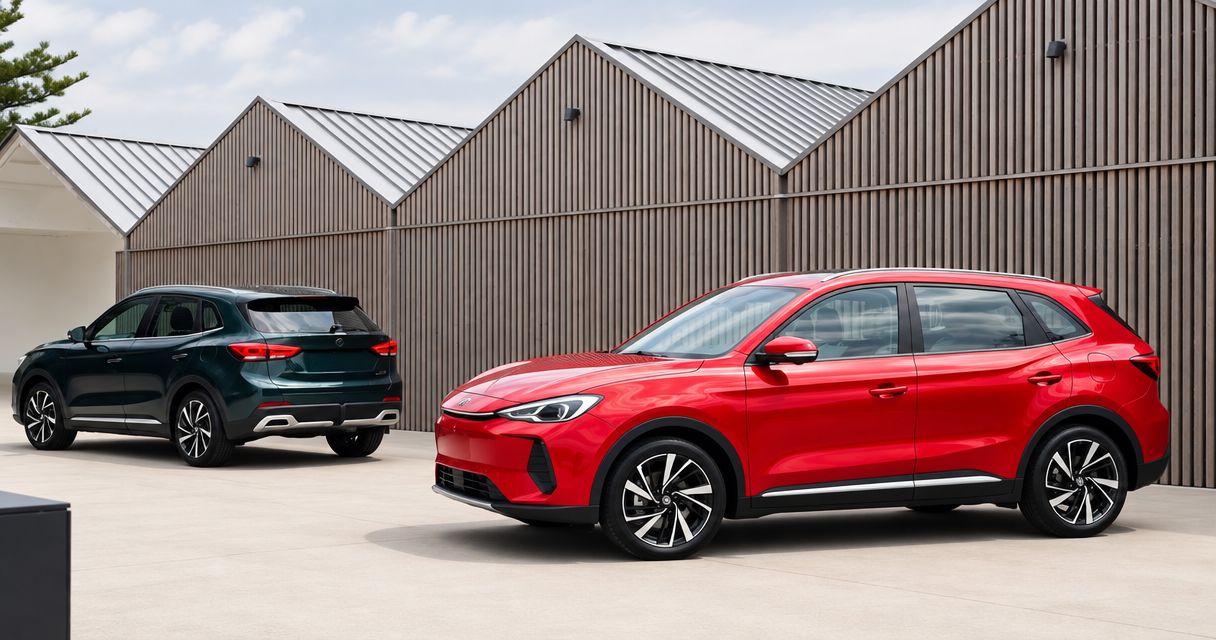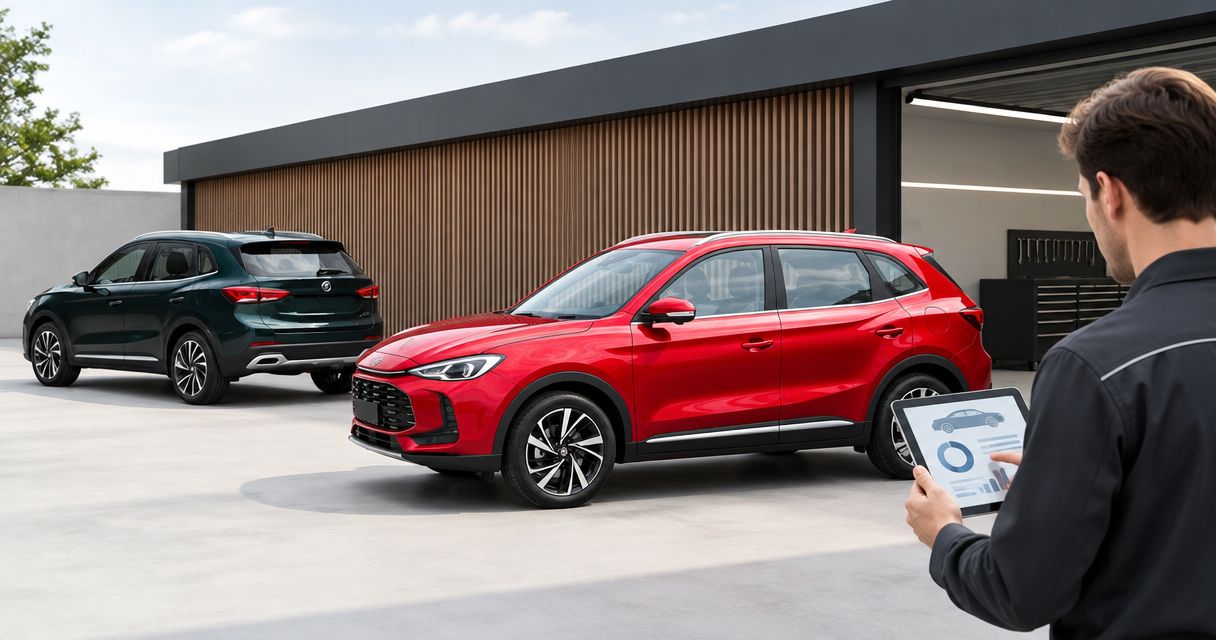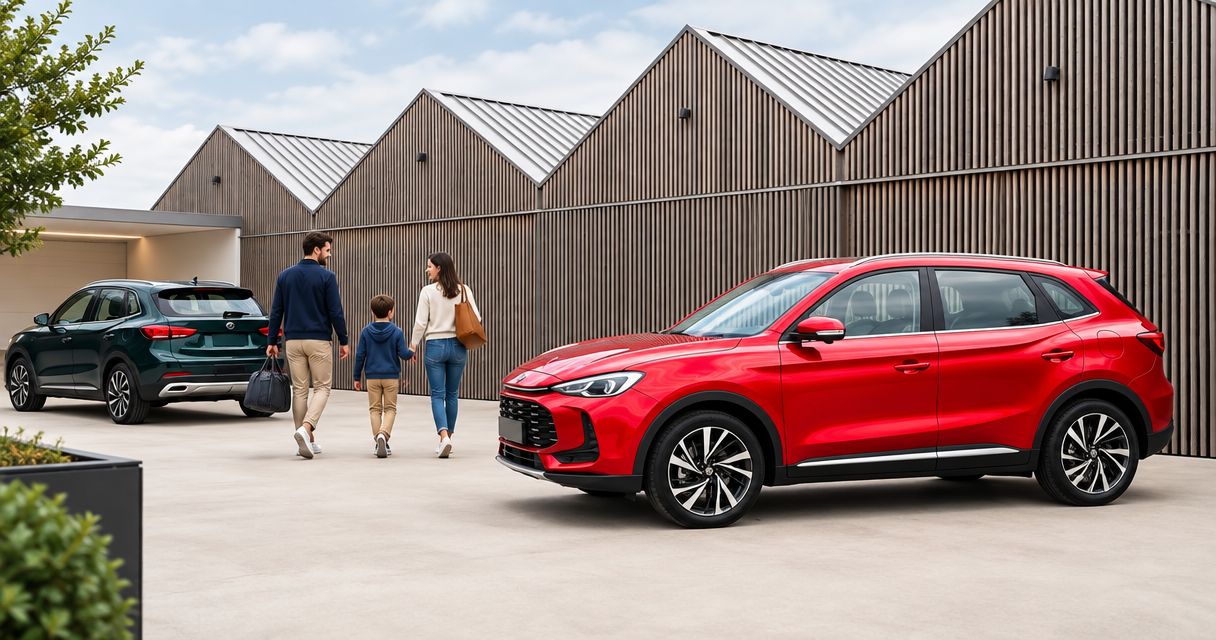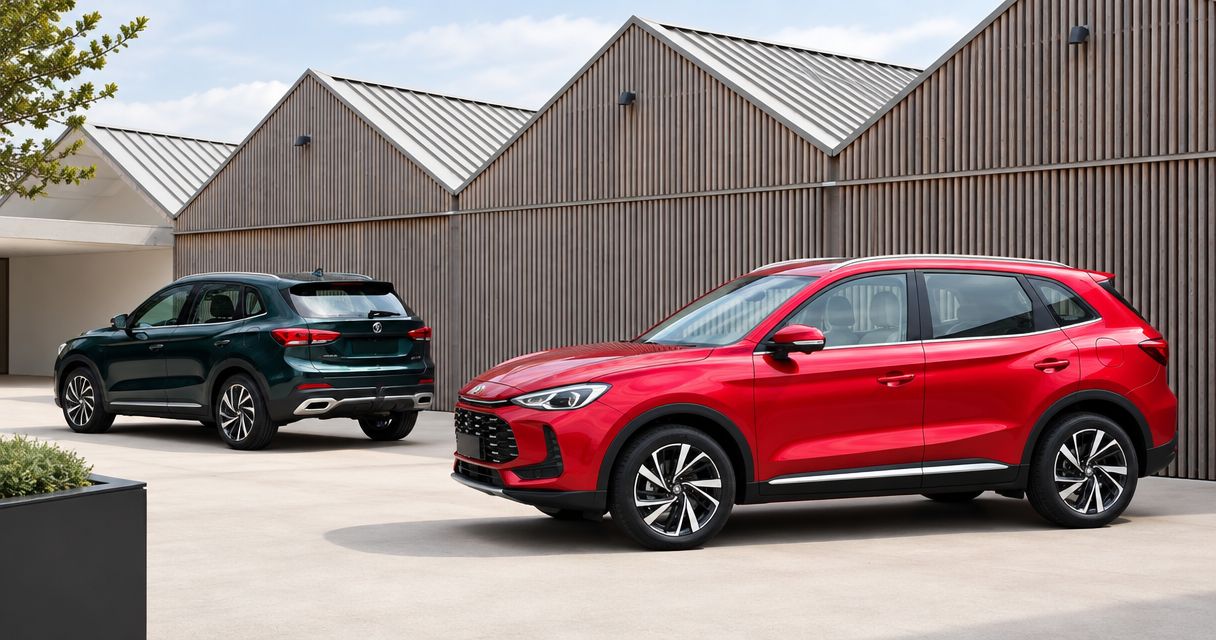
Choose an MG HS hybrid by matching the exact Australian powertrain to your driving: a conventional hybrid suits drivers who want electric assistance without plugging in, while a plug-in hybrid needs a practical charging routine to make use of its rechargeable battery. Petrol remains a comparison option when you do not want to manage charging, but confirm the specific HS model and variant before comparing equipment, consumption or ownership requirements.
- Choose an MG HS hybrid by your driving routine, not the hybrid badge alone.
- Conventional hybrids do not need plugging in; plug-in hybrids need a charging plan to use their rechargeable battery.
- Melbourne City MG offers MG buyers powertrain advice and authorised servicing support in Clifton Hill.
- Confirm the Australian model, variant and servicing requirements before choosing your vehicle.
Why this matters
A short weekday commute, school drop-offs and occasional regional trips place different demands on a car. Your decision needs to cover the whole week, not just the drive you make most often.
Melbourne City MG is best for metropolitan Melbourne buyers seeking MG powertrain advice and authorised servicing in Clifton Hill. Start with Melbourne City MG to discuss which Australian HS configuration matches your needs in 2026, then check the details against the exact vehicle you intend to drive.
MG HS hybrid: which powertrain suits your driving?
A conventional hybrid is the starting point if you want electric assistance without external charging; a plug-in hybrid deserves consideration when regular charging fits your routine. Compare petrol as well, rather than assuming that a hybrid badge settles the decision.
The table explains powertrain categories, not a confirmed list of Australian HS variants. Check which configurations apply to the vehicle you are considering in 2026 before using the comparison to build your shortlist.
| Powertrain category | Best for | Main advantage | Main limitation | What to confirm |
|---|---|---|---|---|
| Conventional hybrid | Drivers who do not want to plug in | Combines petrol power and electric assistance without external charging | Does not offer the same externally rechargeable driving approach as a plug-in hybrid | Exact hybrid system, official consumption and operating behaviour |
| Plug-in hybrid | Drivers with a dependable charging routine | Allows externally charged battery energy to support driving | Requires charging arrangements; petrol use still matters | Charging requirements, official electric range and depleted-battery operation |
| Petrol | Drivers who want to avoid charging arrangements | Uses a familiar refuelling routine | Does not provide a rechargeable electric-driving option | Official consumption, equipment and servicing requirements |
Do not treat a powertrain name as an equipment list. Two vehicles with different engines or hybrid systems also need a separate comparison of seating, luggage space, controls and driver-assistance equipment.
Start with the exact Australian vehicle
Ask for the full model designation, variant and model year. A registration date, advertisement headline or abbreviated badge is not enough to establish which technical information applies.
For a 2026 purchase, request the current Australian specification document for the vehicle under discussion. If an online review describes another market or model year, do not transfer its battery, charging or equipment claims to your shortlist.
Conventional hybrid: best for avoiding a plug-in routine
A conventional hybrid combines a petrol engine with an electric motor and a battery that does not require external charging. The system manages their contribution according to operating conditions; you still refuel with petrol.
Choose this category for its lack of plug-in requirements, not because you expect every journey to be electric. Its practical appeal is that you do not need to organise a charger, a charging bay or access to a shared charging facility.
The limitation is equally important: conventional hybrid does not mean petrol-free driving. Official fuel-consumption information and a representative test drive remain necessary, particularly if much of your travel happens on open roads rather than in suburban traffic.
Before choosing an HS described as a hybrid, ask the dealership to explain what its system does during gentle acceleration, steady cruising and a low battery state. Get an explanation tied to the exact Australian vehicle, rather than a general description of hybrid technology.
Plug-in hybrid: best for drivers who can charge regularly
A plug-in hybrid combines a petrol engine with a battery that can receive energy from an external electricity supply. It gives you a different ownership task: planning when and where to charge, alongside refuelling when needed.
Choose this category only after checking that charging works in your actual parking situation. A private driveway, an apartment garage and street parking are different starting points; none establishes charger suitability on its own.
For a plug-in hybrid considered in 2026, confirm the vehicle's charging specifications and obtain qualified advice about any proposed home installation. Do not assume a nearby socket, a workplace charger or a public charging location provides a dependable solution for your routine.
The advantage is access to externally charged battery energy. The trade-off is the time and organisation charging requires, plus the need to understand how the vehicle operates when that energy is depleted.
Ask for the relevant official consumption information and its test conditions. A figure recorded under a charging-dependent test procedure does not describe every trip you will make without charging.
Petrol: best for drivers who want no charging arrangements
A petrol vehicle removes external charging from the ownership decision. You still need to assess fuel consumption, driving behaviour and whether the vehicle's equipment suits your household.
Keep petrol in the comparison if your charging arrangements are unresolved. This is particularly useful when a plug-in vehicle interests you but your parking access depends on permission or infrastructure that has not been confirmed.
The limitation is that petrol does not provide the rechargeable electric-driving option of a plug-in hybrid. However, that distinction alone does not establish which vehicle will suit your budget or driving better.
Compare like-for-like equipment and current official specifications. Do not attribute every difference between two vehicles to their powertrains when their variants also differ.
Why the right powertrain varies
Your best choice changes with the circumstances below. Use them to test a recommendation rather than accepting a broad claim that one technology suits all Melbourne drivers.
- Charging access: A plug-in hybrid requires a workable place and routine for external charging. Confirm access before relying on it.
- Trip pattern: Separate short local journeys from sustained motorway travel. Ask how each shortlisted powertrain operates in both conditions.
- Parking arrangements: Check who controls the parking space and any electrical work. Access to a space does not establish permission to install charging equipment.
- Household use: Include the trips made by every regular driver. The car needs to suit the household, not just its main commuter.
- Ownership support: Check servicing requirements for the exact model. A hybrid badge does not remove scheduled maintenance.
- Vehicle configuration: Assess luggage, seating and controls alongside the powertrain. Confirm these on the actual variant rather than a similarly named vehicle.
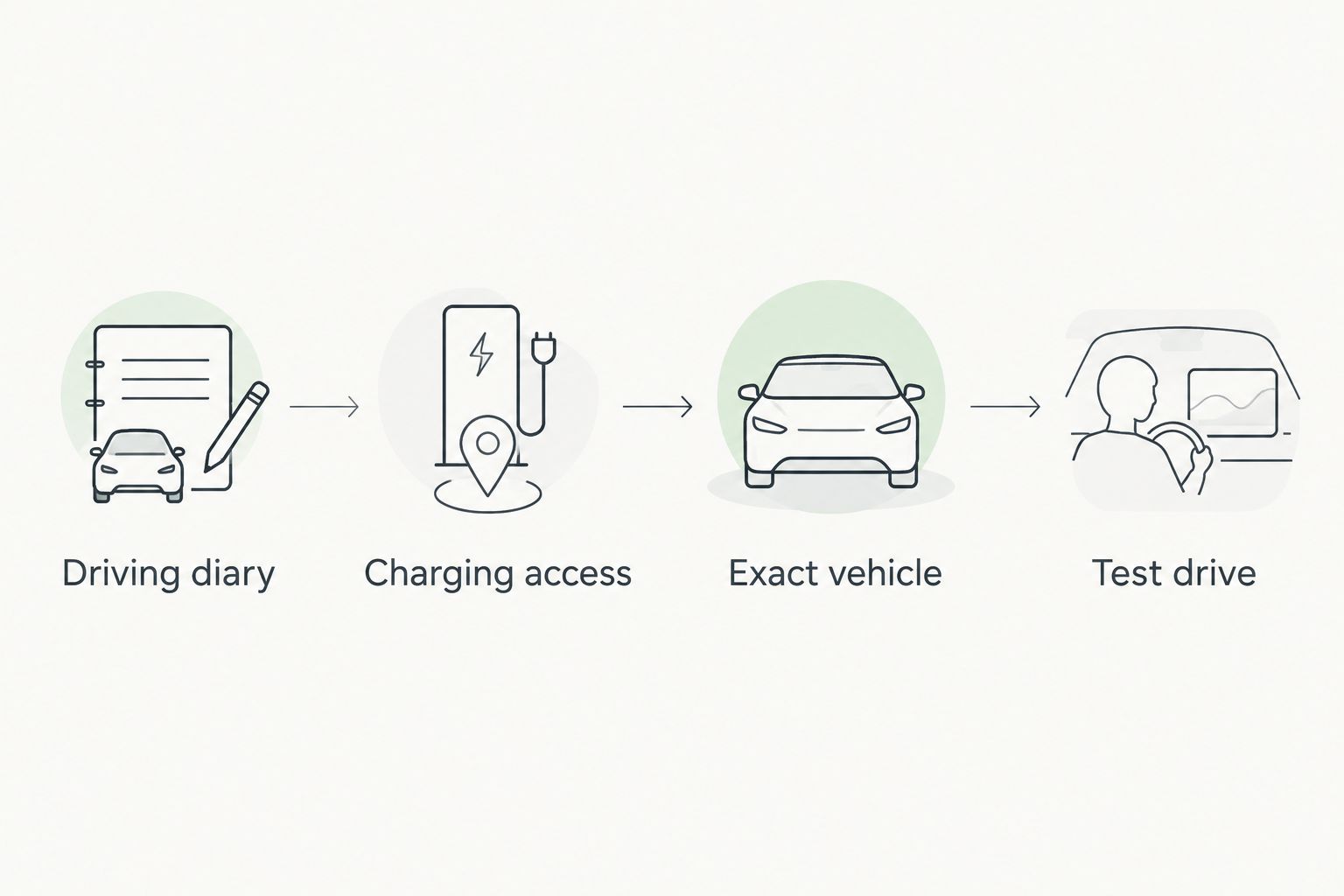
How to narrow your MG HS hybrid shortlist
Use this sequence before asking which vehicle to buy. It turns a broad preference for hybrid technology into questions a dealership can answer directly.
Driving diary
Record your journeys for 7 days, including distance, road type, parking location and which household member drives. This is a suggested planning exercise, not a claim about how long a vehicle assessment must take.
Include an irregular trip that matters to you, such as visiting family outside Melbourne. A normal weekday alone will not capture every requirement.
Charging access
Write down where charging would happen and who controls that space. Distinguish confirmed access from an arrangement you still need to investigate.
If charging depends on workplace permission, apartment approval or electrical work, resolve that question before treating a plug-in hybrid as your preferred option. Ask about the vehicle's charging requirements before seeking installation advice.
Exact vehicle
Request the Australian specification and servicing information for each shortlisted configuration. Keep the model year and variant attached to every document so that comparisons stay consistent.
For your 2026 shortlist, separate verified vehicle facts from general advice about hybrid technology. A technology explanation cannot confirm an individual vehicle's equipment.
Test drive
Ask whether your test drive can cover 2 road types: local streets and a faster road representative of your usual travel. The purpose is to compare behaviour in relevant conditions, not to produce a certified consumption result.
Check visibility, seating comfort, controls and low-speed response as well as acceleration. Ask the specialist to explain any powertrain behaviour you do not recognise.
A useful test drive ends with specific answers, not just a favourable impression. Note any unresolved questions and have the dealership explain them before you commit.
What should you check during a hybrid test drive?
Take 3 questions into the drive: how does the system operate, what changes when battery energy is low, and what maintenance applies? Ask for answers about the exact vehicle rather than hybrids generally.
Listen and feel for the transition between operating modes where applicable. Then assess whether the response feels predictable when leaving a junction, joining traffic and slowing for a turn.
For a plug-in vehicle, ask about its battery state before the drive. That gives context to what you experience without turning a short demonstration into a claim about everyday efficiency.
Do not judge ownership solely by a dashboard reading from one journey. Traffic, route, weather and battery state affect the conditions behind that reading.
How does servicing fit the decision?
Servicing belongs in your vehicle comparison before purchase, not after delivery. Ask which maintenance schedule applies, what records you need to retain and how to identify the next required service.
Melbourne City MG provides authorised MG servicing in Clifton Hill for buyers across metropolitan Melbourne. Connect your powertrain enquiry with a discussion about ongoing service support, especially if hybrid ownership is new to you.
The benefit is access to an authorised MG servicing contact. The practical limitation is location: plan how Clifton Hill fits your workday, transport arrangements and service visits rather than assuming support exists at another branch.
For a 2026 purchase, confirm the current Australian maintenance requirements and applicable ownership terms directly. Do not assume that information for another MG model or an earlier vehicle applies to your choice.
Discuss your MG driving needs
Ask the Clifton Hill dealership about powertrain choices, test drives and authorised servicing.
Can a hybrid suit you without home charging?
A conventional hybrid does not require home charging. A plug-in hybrid is a different decision: check whether another dependable charging arrangement fits your routine before choosing it for its rechargeable driving capability.
Should you compare another MG hybrid before deciding?
Compare another MG hybrid when your vehicle-size and household requirements are still open. First establish passenger and luggage needs, then assess powertrains; a different-sized vehicle is not a substitute for checking the right HS configuration.
FAQ
Which MG HS hybrid powertrain is right for Melbourne driving?
The right MG HS hybrid powertrain depends on your trip pattern and charging access. Confirm the exact Australian configuration, then compare its operation with your weekday travel and longer journeys.
Does an MG HS hybrid need to be plugged in?
Check the exact powertrain: a conventional hybrid does not require external charging, while a plug-in hybrid can charge from an external electricity supply. The word hybrid alone does not identify which system a vehicle has.
Is a plug-in hybrid a good choice if I cannot charge at home?
A plug-in hybrid needs a dependable charging plan to make use of externally supplied battery energy. Confirm whether workplace or other charging genuinely fits your routine before relying on it.
Is a hybrid always better than petrol for motorway driving?
A hybrid badge alone does not establish that a vehicle is better for motorway driving. Compare the exact vehicle's official specifications and assess it on a route representative of your travel.
What should I ask before an MG HS hybrid test drive?
Ask which Australian model and variant you will drive, how its powertrain operates and what servicing it requires. For a plug-in vehicle, also ask about its battery state before the drive.
Does a hybrid still need scheduled servicing?
A hybrid still needs maintenance according to its applicable service schedule. Confirm the requirements for the exact model rather than assuming electric assistance removes routine servicing.
Where is Melbourne City MG located?
Melbourne City MG is an authorised MG dealership in Clifton Hill, Victoria, serving metropolitan Melbourne. It offers new MG vehicles, finance, servicing and parts.
One last thing
Ask about low-battery operation before asking about electric driving. For a plug-in hybrid, the experience after externally charged energy has been used matters on trips where you cannot recharge.
That question keeps the decision grounded in ownership rather than a single demonstration. Choose the vehicle whose normal operation, charging requirements and servicing arrangements fit your life.