Best overall shortlist: MGS5 EV for mixed work-and-family electric driving. Best for solo call-outs: MG4. Best for drivers who do not want a charging routine: MG ZS Hybrid. For the best MG for tradies in 2026, start with your tools and load requirements, then arrange a fit check with Melbourne City MG in Clifton Hill.
- The best MG for tradies depends on loaded weight, tool access and towing requirements, not boot size alone.
- Shortlist MGS5 EV for mixed electric work-and-family use, subject to a practical load check.
- Shortlist MG4 for solo service calls carrying a contained tool kit.
- Consider MG ZS Hybrid when you want hybrid driving without planning plug-in charging.
- Confirm the exact variant’s payload and towing limits before committing to any work vehicle.
Why this matters
A car that carries your weekend bags does not automatically suit your working week. Tool cases, spare parts, passengers and accessories all place demands on the same vehicle, while awkward equipment creates problems that a boot-volume figure cannot explain.
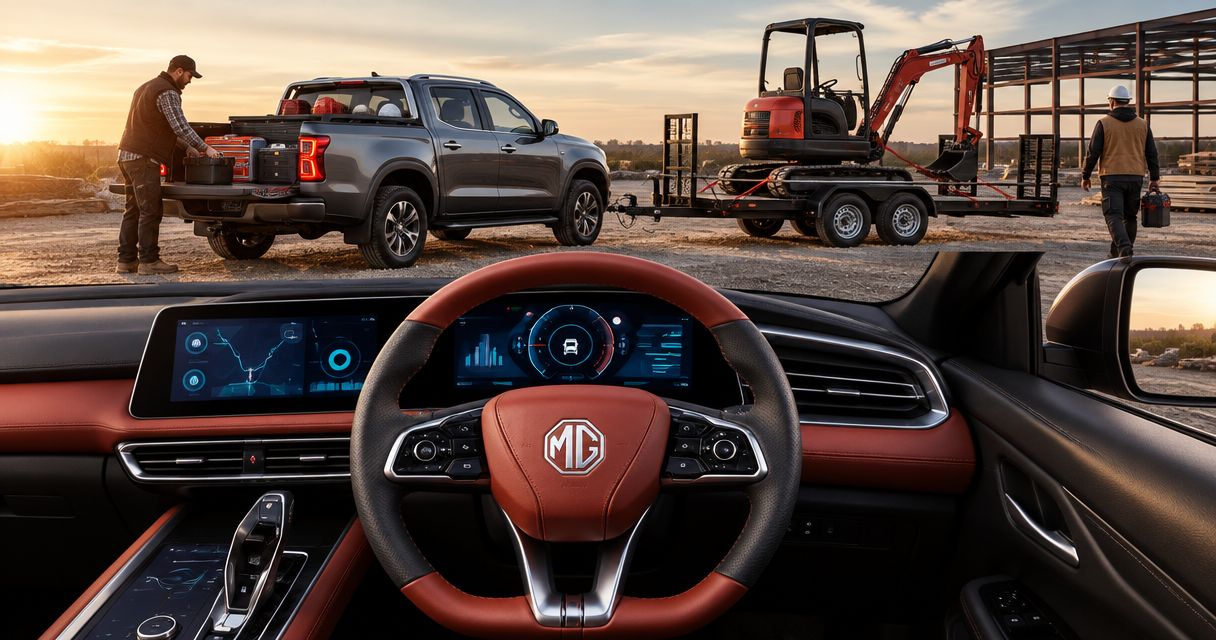
For a tradie choosing an MG in 2026, the first decision is whether you need a passenger car for travelling between jobs or a dedicated load carrier. This shortlist suits the first task; it does not establish that any listed model meets a particular payload or towing requirement.
Melbourne City MG is best for metropolitan Melbourne tradies who want to compare MG passenger cars and discuss authorised servicing at the Clifton Hill dealership. Bring your work requirements to that conversation, rather than choosing a powertrain first and trying to make the equipment fit later.
What makes the best MG for tradies?
Use these criteria before comparing equipment lists:
- Loaded weight: Check the exact vehicle’s permitted mass against people, tools, accessories and any trailer load imposed on the car.
- Usable storage: Test the boot opening, floor shape and access with your actual cases, not their advertised dimensions alone.
- Load restraint: Confirm how equipment can be secured without obstructing passengers, visibility or controls.
- Daily energy routine: Match electric or hybrid driving to your parking arrangements and working routes.
- Towing suitability: Verify the precise variant’s limits and approved towing equipment before ordering accessories.
- Ownership support: Ask how your work use affects the applicable servicing schedule and what information to supply when booking.
Give each criterion a pass or fail. An attractive feature list does not compensate for a failed load or towing requirement.
MG work-use shortlist at a glance
These are different starting points for different jobs, not a claim that one model carries more than another. Confirm Australian specifications for the exact 2026 vehicle you are considering.
| MG option | Best for | Main reason to shortlist | Key limitation or check |
|---|---|---|---|
| MGS5 EV: towing checks | Mixed work-and-family electric use | An electric option to assess against both weekday equipment and passenger needs | Charging, loaded weight and any towing requirement must all work together |
| MG4: boot fit check | Solo call-outs with a contained kit | A focused shortlist for drivers who carry tools rather than bulky materials | Your largest case and normal seating arrangement must pass a physical fit test |
| MG ZS Hybrid | Work travel without plug-in charging | A hybrid alternative when a charging routine does not suit your work | Hybrid power does not establish payload or towing suitability |
1. MGS5 EV: best MG shortlist for mixed electric work use
Start with the MGS5 EV if you want an electric vehicle to serve both work trips and family duties. Assess those jobs together: a boot arrangement that works with seats folded is not a solution when passengers need those seats.
For your 2026 test drive, bring your largest tool case and a representative selection of everyday equipment. Load the car in the seating configuration you will actually use, then check whether everything has a suitable restraint arrangement.
MGS5 EV pros for this use case:
- Provides an electric option for buyers prioritising electric work travel.
- Lets you assess work equipment and family seating in the same inspection.
- Fits a shortlist built around a repeatable charging routine.
MGS5 EV cons and checks:
- Charging needs to fit your parking access and changing work locations.
- Passenger space and tool storage must work simultaneously.
- Towing suitability requires exact-variant confirmation; the model name is not enough.
Best for: A metropolitan Melbourne tradie seeking electric driving for work travel and personal use, with equipment that passes the load check.
Ask about authorised servicing alongside vehicle selection. Explain the driving pattern, typical load and any planned accessories so the discussion reflects how you will use the car.
Verdict: Hold until the MGS5 EV passes your loaded fit check and charging plan.
2. MG4: best MG shortlist for solo service call-outs
Put the MG4 on your shortlist when your work centres on visiting customers with a contained tool kit. This is a different brief from carrying long materials, dirty machinery or a trailer throughout the week.
The useful question is not whether a case fits once. It is whether you can retrieve the right equipment at each stop without repeatedly unloading everything else.
MG4 pros for this use case:
- Provides an electric option for a work brief centred on travel between jobs.
- Can be assessed with your complete everyday kit during a dealership visit.
- Keeps the buying decision focused on actual equipment rather than hypothetical extra space.
MG4 cons and checks:
- Awkward cases still need an opening and loading-height check.
- Extra passengers change the storage arrangement you can use.
- An electric powertrain requires a charging plan that survives an unplanned job.
Best for: A solo service technician or estimator carrying a defined set of equipment rather than bulk building supplies.
Use a 10-minute loading exercise as a suggested test. Put your heaviest and most frequently used cases where they would normally travel, secure them appropriately, then retrieve each one without disturbing the rest. Do not drive with loose tools simply to complete a demonstration.
Verdict: Hold until the MG4 carries your normal kit securely with the seats you need in use.
3. MG ZS Hybrid: best MG shortlist without plug-in charging
Consider the MG ZS Hybrid when you want a hybrid option but do not want your workday organised around plugging in. The charging distinction is useful; it does not settle questions about tool storage, carrying capacity or trailer compatibility.
For a 2026 comparison, give the MG ZS Hybrid the same practical assessment as the electric options. Do not excuse an awkward load arrangement because the powertrain better suits your parking situation.
MG ZS Hybrid pros for this use case:
- Offers a hybrid alternative to the electric shortlist.
- Removes plug-in charging from the daily planning exercise.
- Gives buyers without a workable charging arrangement another powertrain to assess.
MG ZS Hybrid cons and checks:
- Petrol refuelling remains part of ownership.
- The hybrid label does not tell you how much work equipment you can carry.
- Towing limits and accessory compatibility still require variant-specific confirmation.
Best for: A tradie whose work travel suits a passenger vehicle but whose parking or daily routine does not suit plug-in charging.
Assess the driving experience with your usual work pattern in mind. Include stop-start streets, parking manoeuvres and the road types you regularly encounter, rather than judging the vehicle solely on a short open-road run.
Verdict: Hold until the MG ZS Hybrid passes the same storage and weight checks as the electric alternatives.
Check payload before you judge boot space
Boot space describes room; payload concerns weight. A large empty area does not establish that the vehicle can legally carry everything you intend to put inside it.
Ask for the exact vehicle’s gross vehicle mass, relevant unladen-mass definition and applicable axle limits. Have the dealership explain which people, fluids and equipment are already included in the quoted figures, then account for everything else you intend to carry.
Build a written load list:
- Driver and regular passengers.
- Tool cases, batteries and diagnostic equipment.
- Consumables, spare parts and protective equipment.
- Fitted accessories and storage equipment.
- Trailer coupling load, if towing applies.
Where the loaded vehicle’s weight remains uncertain, use an appropriate weighbridge assessment rather than relying on visual judgement. A tidy boot can still contain a heavy load.
Keep weight and access as separate pass-or-fail checks. Passing one does not compensate for failing the other, and removing equipment for the test drive defeats the purpose of checking your working setup.
Separate towing capacity from suspension support
If a trailer is essential to your income, make towing eligibility a gate before choosing any model. Confirm the exact variant’s braked and unbraked towing limits, permitted coupling load, relevant combination limits and approved towbar requirements.
Ask how the proposed trailer changes the vehicle’s remaining carrying allowance. Include passengers and tools in that discussion; the trailer and car cannot be assessed as unrelated loads.
Suspension accessories answer a different question. Even when comparing airbag kits for constant loads, distinguish support for a load from permission to carry it: fitting suspension assistance does not by itself increase a vehicle’s legal mass ratings.
Do not assume an accessory suits an MG simply because it is discussed for another work vehicle. Confirm compatibility, installation requirements and the effect of any modification with the appropriate manufacturer or qualified specialist.
If towing is non-negotiable, leave the shortlist undecided until the vehicle-and-trailer combination is verified. A general recommendation cannot replace that check.
Test the workday, not just the car
A useful 2026 test drive starts before you arrive at the dealership. Record 7 days of driving as a suggested planning exercise, including start points, job changes, parking arrangements and the equipment you actually carry.
Then request a 20-minute driving assessment, or another duration agreed with the dealership, on roads relevant to your work. The duration is a planning suggestion, not a promise about test-drive arrangements.
During the visit, check:
- Whether you can load cases without an awkward twist or lift.
- Whether the tailgate and doors open comfortably in the spaces you use.
- Whether your equipment blocks rearward visibility.
- Whether passengers can sit normally with the tools aboard.
- Whether parking and reversing feel manageable from the driver’s seat.
For an electric option, map charging around places you can genuinely use. Include access restrictions and the consequences of arriving later than planned; do not base the purchase on charging at a customer’s property without permission.
For a hybrid, compare the same work routes and loading needs. Avoid assuming that a powertrain label alone establishes a particular fuel saving.
Connect vehicle choice with authorised servicing
Work use belongs in the servicing conversation from the start. Tell Melbourne City MG whether the vehicle will carry tools, spend time on dusty access roads, tow a trailer or make repeated short trips.
Ask which service schedule applies to the exact model and your stated use. Confirm the current Australian requirements rather than transferring an interval or warranty expectation from another MG, a different model year or an overseas website.
When booking, describe symptoms and work-related concerns clearly. A note about a noise with equipment aboard is more actionable than a general request to check everything.
Keep records of fitted accessories, service work and any changes to your usual load. Those details make later discussions about parts, maintenance and vehicle suitability more precise.
How the shortlist is ranked
The order follows the three work briefs, not claimed towing strength or measured cargo superiority. MGS5 EV leads for a combined electric work-and-family brief; MG4 addresses solo call-outs; MG ZS Hybrid addresses buyers who do not want plug-in charging.
Each recommendation remains subject to the same criteria: loaded weight, usable storage, restraint, daily energy routine, towing eligibility and servicing requirements. No ranking overrides an exact-vehicle limit.
Which MG should you choose for trade work?
Start with the MGS5 EV if electric driving and mixed family use are your priorities. Choose the MG4 assessment first when your work kit is contained and solo call-outs define the job. Start with the MG ZS Hybrid when plug-in charging does not fit your routine.
If the core requirement is carrying heavy materials, exposed dirty equipment or an essential trailer, settle those requirements before choosing between these passenger vehicles. Do not buy first and rely on accessories to solve a failed suitability check.
FAQ
What’s the best MG for tradies in Melbourne?
The best MG for tradies depends on the equipment, passengers and towing requirements. Start with MGS5 EV for mixed electric work-and-family use, MG4 for solo call-outs, or MG ZS Hybrid when plug-in charging does not suit your routine, then verify the exact vehicle.
Can I carry my tools in an MG4?
Confirm MG4 suitability with your actual tools, the required seating arrangement and the exact vehicle’s mass limits. Check both secure restraint and everyday access; physical fit alone is not enough.
Is an MGS5 EV suitable for towing a work trailer?
MGS5 EV towing suitability requires confirmation for the exact Australian variant and proposed trailer. Verify towing limits, coupling load, approved equipment and the effect on the car’s remaining carrying allowance before fitting a towbar.
Does the MG ZS Hybrid need a plug-in charging routine?
The MG ZS Hybrid does not require a plug-in charging routine. Confirm the exact model and variant when enquiring, and assess its storage and weight limits separately from its powertrain.
Do suspension airbags increase legal payload?
Suspension airbags do not by themselves increase a vehicle’s legal payload or mass ratings. Accessory compatibility and any approved rating changes require separate confirmation; load support is not permission to exceed a limit.
What should I bring to a work-vehicle test drive?
Bring your largest tool case, representative everyday equipment and a written load list. Agree the loading exercise with the dealership and check the seating arrangement you actually need.
Where can Melbourne tradies discuss MG servicing?
Melbourne City MG offers authorised MG servicing in Clifton Hill and serves metropolitan Melbourne. Explain your work use and confirm the applicable schedule and booking requirements for your exact vehicle.
One last thing
Photograph your normal equipment layout before the dealership visit. Then bring the case you find most awkward to load—not the one that is easiest to demonstrate. The most revealing fit check tests the inconvenience you face every working day.