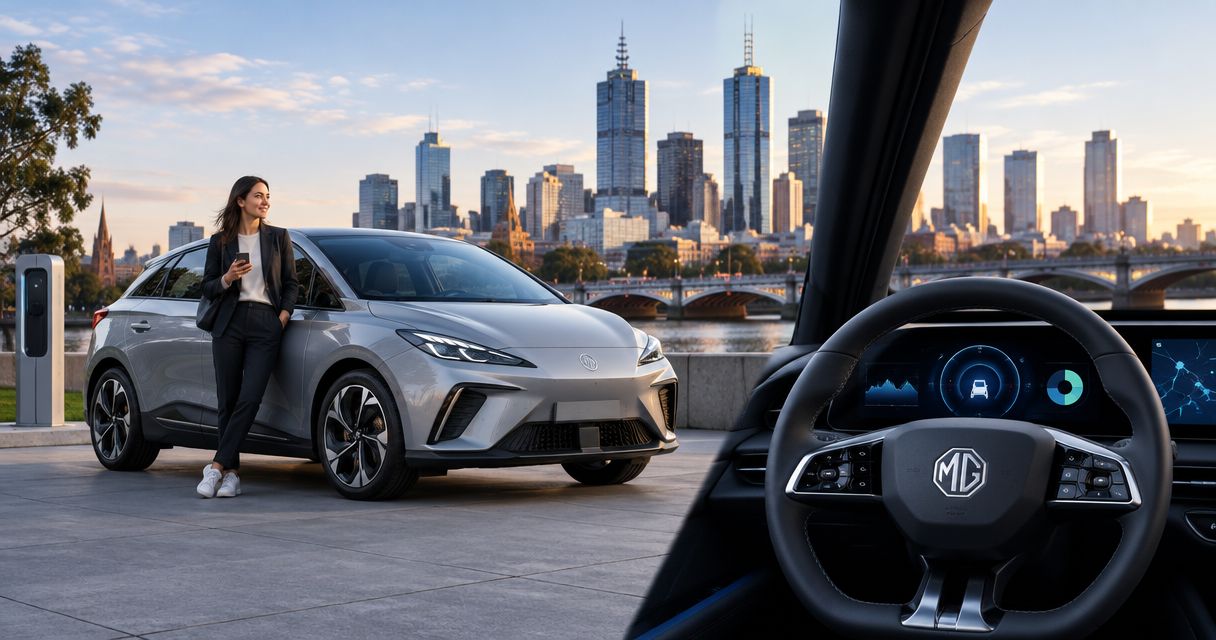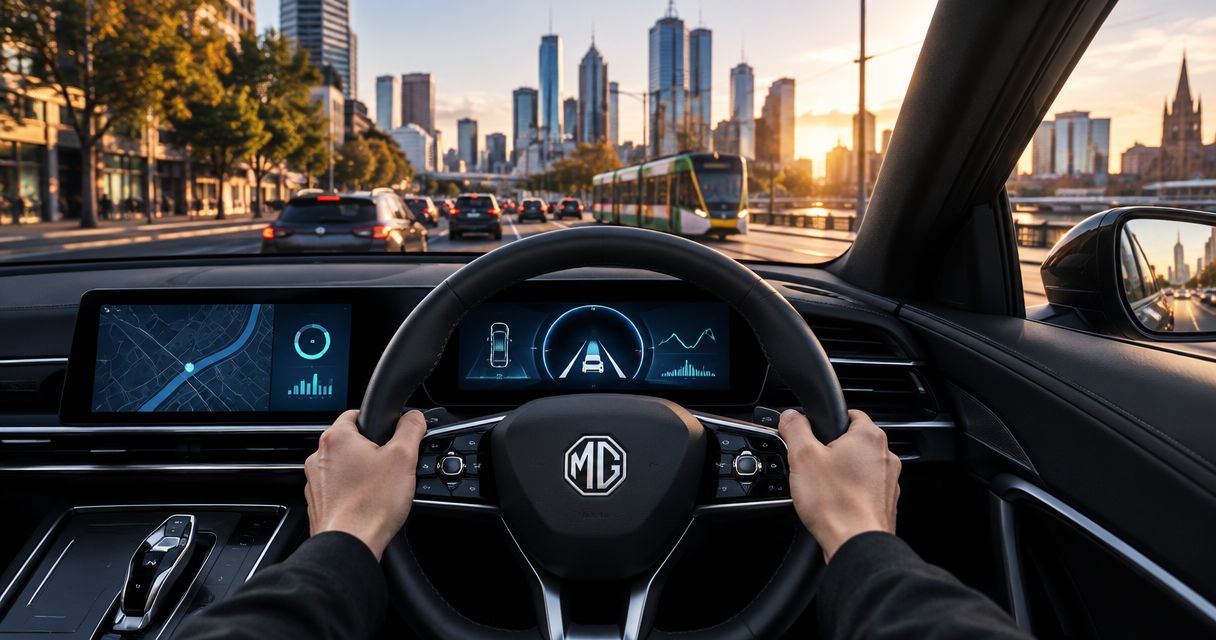
On an MG4 test drive in Melbourne, check low-speed control, braking feel, visibility and parking before judging acceleration. Drive on roads that resemble your normal trips, try a realistic parking space, and confirm the exact car’s equipment and charging requirements before you decide.
- An MG4 test drive should prioritise Melbourne traffic, parking visibility and everyday comfort over acceleration.
- Check the exact vehicle’s equipment; do not assume another model year or variant matches it.
- Try your normal parking manoeuvres and bring the items you regularly carry.
- Melbourne City MG offers authorised MG servicing in Clifton Hill, connecting vehicle enquiries with ownership support.
MG4 test drive: what should you check in Melbourne traffic and parking?
Start with the driving you do most, not the stretch of road that makes the car feel most exciting. For a 2026 buying decision, use a repeatable route and record what works for you while the experience is fresh.
Before leaving Melbourne City MG, ask which model year and variant you are driving. Have the controls explained while parked, including gear selection, parking brake operation and any adjustable driving settings fitted to that vehicle.
- Set up your driving position. Adjust the seat, steering wheel and mirrors, then check that you can see the instruments without changing your posture.
- Drive through ordinary traffic. Notice accelerator response, braking and how easily you maintain a comfortable gap.
- Include a representative road surface. Assess comfort and noise on a lawful route agreed with the dealership.
- Park somewhere realistic. Check sightlines, steering effort, door access and any fitted parking aids.
- Finish with ownership questions. Discuss charging, servicing and the equipment on the vehicle you are considering.
Treat the test drive as a fit check, not a performance demonstration. You need a car that feels manageable when the road is busy and the parking space is awkward.
Why this matters
A short drive on an unfamiliar route leaves everyday questions unanswered. Comfortable acceleration does not tell you whether you can judge a kerb, reach a control without stretching or load your usual bags.
A useful 2026 test drive separates what the car does from whether it suits you. There is no substitute for checking your seating position and parking confidence in person, even when you have already read the specifications.
Plan a route that reflects your Melbourne driving
Ask about a route that includes ordinary intersections, slower traffic and a suitable place to park. Add a faster road only where the agreed route and conditions allow it; never turn a test drive into a search for the car’s limits.
As a planning suggestion, ask whether you can allow 20 minutes of driving, plus separate time for a parked walk-through. This is not a booking entitlement or a minimum assessment standard: agree the appointment arrangements with the dealership.
| Route element | Best for checking | Useful observation | Limitation |
|---|---|---|---|
| Stop-start streets | Everyday pedal control | Whether moving off and slowing down feel predictable | One traffic pattern does not represent every commute |
| An uneven road surface | Ride comfort | How the seat and suspension feel to you | Speed and surface affect the impression |
| A lawful higher-speed section | Cruising comfort | Noise, seating support and mirror visibility | Traffic conditions can restrict the assessment |
| A suitable parking area | Low-speed confidence | Kerb judgement, steering and access | A generous bay can hide difficulties at home |
Choose representative conditions over a longer but irrelevant route. If your daily driving centres on narrow streets and tight parking, give those tasks proper attention.
Check the driving position before moving
Sit as you would on a normal trip, wearing your usual driving shoes. Check pedal reach, steering-wheel clearance and whether the seat supports you without forcing you to lean forwards.
Look through the windscreen and side windows from that position. Check the mirrors next; changing the seat afterwards changes those sightlines.
While stationary, locate the demister, hazard lights and climate controls. Ask for a demonstration of unfamiliar functions rather than trying to learn them while approaching an intersection.
If someone else will regularly drive the car, ask whether they can assess the seating position too. A comfortable setup for you does not establish that it works for a partner with a different height or reach.
Assess the MG4 in stop-start traffic
Does moving off feel easy to control?
Apply the accelerator gently from a safe, stationary position when it is lawful to proceed. Notice whether you can build speed smoothly without making repeated corrections.
Repeat that observation in ordinary traffic rather than judging the car from one departure. The useful question is whether the response feels predictable to you, particularly when the road ahead is congested.
Are you comfortable slowing down?
Electric-car deceleration can feel different from the petrol car you already know. Ask how regenerative braking operates on the exact MG4 being demonstrated and whether its settings are adjustable.
If different settings are demonstrated, have the salesperson explain them before you continue. Do not assume regenerative braking removes the need to use the brake pedal, and do not test emergency braking on a public road.
Can you keep your attention outside?
Notice whether routine controls take your attention away from traffic. Leave phone pairing and detailed menu checks until you are parked.
If a fitted assistance feature gives an alert, ask what triggered it after stopping safely. One alert is not enough to judge how a system behaves across different roads and conditions.
Test parking as carefully as the drive
Plan 2 parking manoeuvres as a practical checklist: reversing into a suitable bay and parking parallel to a kerb where lawful and safe. These are suggested tasks, not a measure of the car’s capabilities.
Use direct observation and mirrors throughout. Cameras and sensors, where fitted, support the manoeuvre; they do not replace checking for people, objects and traffic around the vehicle.
Reverse parking: check the final position
Start with a space appropriate to your confidence and the conditions. Notice how easily you judge the rear corners and whether the steering response helps you make small corrections.
Once parked, secure the vehicle and inspect its position. Compare where you thought the car was with where it actually sits, rather than relying only on the view from the driver’s seat.
Parallel parking: check kerb judgement
Choose a legal space without creating pressure for other road users. Assess how well you can judge the kerb and whether you feel comfortable making the final adjustment.
If your home parking is tight, bring measurements rather than relying on memory. Ask for the exact vehicle dimensions and consider the space needed to open doors, not just the footprint of the parked car.
Getting out: check usable access
Open the driver’s door only when safe and see whether you can get out comfortably. Repeat the access check for passengers who regularly travel with you.
A car that fits inside a bay still needs room for people to enter and leave. That distinction matters when comparing the test-drive parking area with your garage or apartment space.
Check passenger comfort and the items you carry
Bring a representative bag, pram or other everyday item if practical, and ask before loading it. Check the opening and loading movement as well as whether the item fits inside.
For a child restraint, discuss a safe fit check using the vehicle handbook and restraint instructions. Do not infer compatibility from how spacious the rear seat looks.
Sit in the rear with the driver’s seat left in your normal position. Check foot space, head clearance and entry and exit; moving the front seat forwards just for this check defeats the purpose.
Ask how the exact vehicle’s rear seats fold and whether the resulting arrangement suits your needs. Record any compromise plainly, including an awkward loading movement or a passenger position that feels cramped.
Why your MG4 test-drive experience varies
Use these factors to interpret a 2026 demonstration fairly. They help explain why another drive, or another driver’s verdict, is not a substitute for your own assessment.
- Model year and variant: Confirm the demonstrated vehicle’s specification before comparing equipment or controls with another car.
- Seat and mirror setup: Your driving position changes visibility, reach and your impression of available space.
- Driving settings: Ask which settings are active so you understand the response you are assessing.
- Road and traffic conditions: Surface, speed and congestion change what the route lets you evaluate.
- Passengers and luggage: Assess the people and items you actually carry rather than an empty cabin alone.
- Previous driving experience: Familiar controls can feel easier initially; unfamiliar controls deserve a clear explanation before judgement.
If something bothers you, name the specific issue. “I cannot judge the rear corner” gives the salesperson a useful question to address; “it feels different” does not identify the problem.
Connect the test drive with charging and servicing
The drive answers whether you like using the car. It does not establish whether your charging arrangements suit your week.
For your 2026 shortlist, write down 7 days of typical trips as a planning exercise. Include the distance you actually cover, where you park and when you could charge, without assuming access to a particular charger.
Ask which charging equipment comes with the exact vehicle and what additional arrangements you would need. For a proposed home installation, seek advice from a suitably qualified electrician; the test drive cannot establish electrical suitability or property permission.
Melbourne City MG is best for metropolitan Melbourne MG buyers seeking an authorised dealership in Clifton Hill with servicing support. Ask how to arrange servicing and which schedule applies to the vehicle you are considering, rather than assuming every MG has identical requirements.
The advantage of discussing ownership alongside the drive is that you can resolve practical questions before choosing. The limitation remains: dealership advice does not replace checking your own parking access, charging arrangements or household needs.
How do I know whether the test-drive car matches my choice?
Confirm the model year, variant and relevant equipment before treating the demonstration as representative. Ask the salesperson to identify any differences between the car you drove and the vehicle you are considering.
For a 2026 purchase enquiry, keep those details with your notes. A familiar model name alone does not confirm that two cars have the same equipment.
What should I ask after the MG4 test drive?
Ask about unresolved observations first: braking feel, parking visibility, control operation or passenger access. Request a parked demonstration where an explanation would help, rather than accepting an unclear answer.
Then confirm charging equipment and the applicable servicing requirements with Melbourne City MG. Separate what you have personally checked from what still needs confirmation.
FAQ
What should I check first on an MG4 test drive?
Check your driving position, visibility and familiarity with the controls before moving. Then assess low-speed accelerator response and braking on the agreed route.
Can I try parking during an MG4 test drive?
Ask to include parking in a safe, lawful location as part of the agreed test-drive route. Check mirror visibility, kerb judgement and door access, using any fitted parking aids as support rather than a substitute for observation.
How long should I allow for an MG4 test drive?
Ask whether you can allow 20 minutes of driving plus separate time for a parked walk-through. This is a planning suggestion; confirm the appointment arrangements with the dealership.
Should I test regenerative braking in the MG4?
Ask for an explanation of regenerative braking on the exact MG4 you are driving. Assess the feel during ordinary, safe driving and continue to use the brake pedal whenever required.
Should I bring a child seat or pram to the test drive?
Bring regularly used items if practical and agree a fit check with the dealership. Follow the vehicle handbook and child-restraint instructions rather than judging compatibility by appearance.
Does an MG4 test drive tell me whether home charging will work?
An MG4 test drive does not establish whether your home is suitable for charging. Confirm vehicle charging requirements, property permission where relevant and electrical suitability separately.
Where is Melbourne City MG located?
Melbourne City MG is an authorised MG dealership in Clifton Hill, Victoria, serving metropolitan Melbourne. It offers vehicle enquiries, finance, servicing and parts.
One last thing
Before ending the appointment, return the seat and mirrors to your preferred position and repeat the visibility check while parked. That simple reset helps distinguish an unfamiliar setup from a genuine difficulty seeing out.
Write down the compromise you would notice every day. A specific concern about parking, seating or charging deserves an answer before a memorable acceleration run influences your decision.