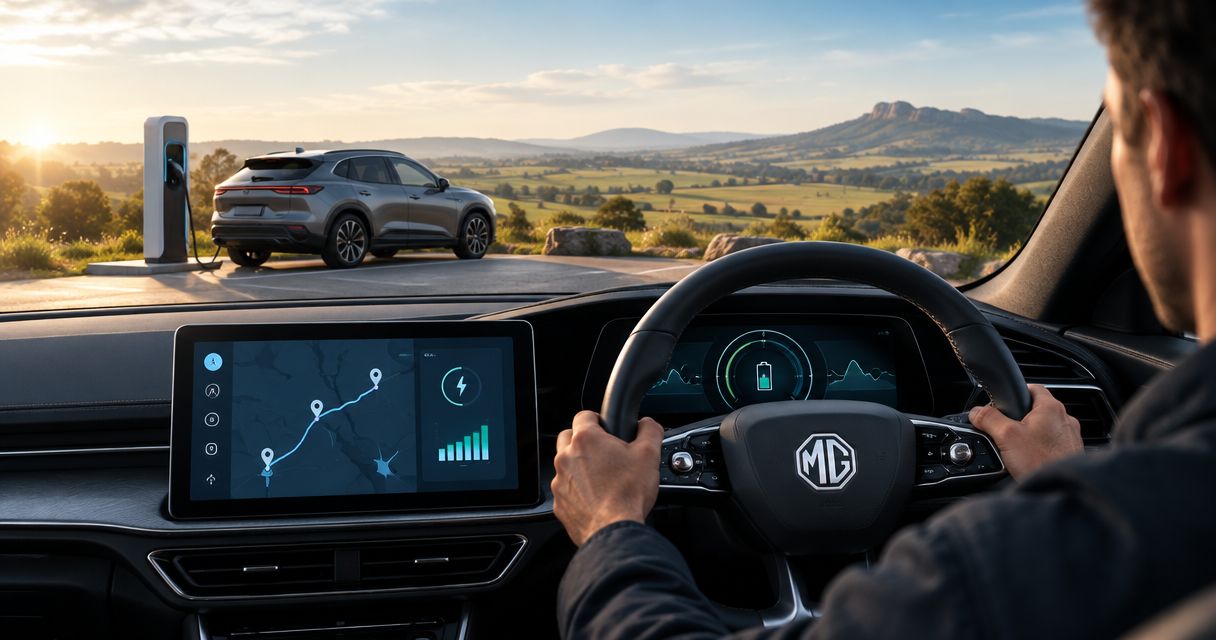
Check MGS5 EV comfort, visibility and parking by setting your driving position while stationary, driving on roads that resemble your daily trips, then trying a permitted parking manoeuvre. For your 2026 test drive, assess the exact vehicle you would buy: a comfortable seat does not establish good visibility, and a parking display does not replace checking your surroundings.
- An MGS5 EV test drive should test seat comfort, direct visibility and parking separately.
- Adjust your seat before your mirrors, then repeat the checks with your usual passengers.
- Confirm parking equipment on the exact variant rather than assuming every MGS5 EV has identical features.
- Melbourne City MG serves metropolitan Melbourne from Clifton Hill, with new MG vehicles and authorised servicing.
Why this matters
A short drive can answer whether you like a car without answering whether it fits your life. Your commute, driveway, passengers and seating position need separate checks. Judge the vehicle against your routine, not just an easy route around the dealership.
Melbourne City MG is an authorised MG dealership in Clifton Hill, serving metropolitan Melbourne. Discuss your intended use when arranging an enquiry so the conversation covers both vehicle selection and servicing support.
Treat this as a practical 2026 buying checklist, not a specification sheet. Confirm the model year, variant and equipment of the demonstration vehicle before applying anything you observe to another car.
MGS5 EV test drive: how do you check comfort, visibility and parking?
Use this sequence so one adjustment does not undermine the next. Changing seat height after setting the mirrors, for example, means you need to check those mirrors again.
- Identify the vehicle. Record its model year and variant, and ask which fitted equipment is relevant to visibility and parking.
- Set your driving position. Adjust the seat and steering wheel using the controls available, then check pedal reach and your view of the instruments.
- Set the mirrors. Check the rearward view from your settled driving position, not while leaning forward.
- Drive a representative route. Ask to include suitable junctions, uneven surfaces and traffic conditions where permitted.
- Try parking. Use a safe, permitted space and ask for a demonstration of any fitted assistance before relying on it.
- Repeat the passenger check. Sit behind your own driving position and ask your usual passenger to assess access and comfort.
As a planning suggestion, allow 5 minutes while parked before setting off. This gives you space to learn essential controls rather than discovering them in traffic; agree the overall appointment length with the dealership.
| Check | What it helps you assess | What it does not establish |
|---|---|---|
| Stationary seating check | Reach, headroom, support and entry | Comfort throughout a long journey |
| Road drive | Ride feel, control familiarity and moving visibility | Behaviour on roads you did not drive |
| Parking exercise | Judgement of the car in that particular space | Fit in your own garage |
| Passenger check | Access and seating behind your driving position | Suitability for passengers who are not present |
How should you check seat comfort?
Start with your feet, then work upwards. With the vehicle safely stationary, check that you can operate the pedals without stretching, lifting your hips or crowding your knees. Ask the specialist to explain the correct stationary setup before trying unfamiliar controls.
Set the backrest so your shoulders remain supported when you reach the steering wheel. Check that you can see the instruments without moving your head around the wheel, and that your knees have clearance beneath it.
Pay attention to these details:
- Thigh support: notice whether the cushion supports your legs without uncomfortable pressure behind your knees.
- Lower-back comfort: use any adjustment actually fitted and check whether it suits you.
- Headroom: sit naturally rather than lowering yourself to create clearance.
- Elbow space: check your normal driving posture without leaning away from the door.
- Entry and exit: get in and out as you would at home, including with your usual jacket or bag.
Repeat the check after driving. A seat that feels comfortable on first sitting deserves another assessment once you have used the pedals and steering wheel in traffic.
Do not accept an awkward driving position just to improve the view. If you must choose between comfortable pedal reach and seeing clearly, ask for help adjusting the setup before deciding whether the car suits you.
How should you check visibility at Melbourne junctions?
Check direct visibility before discussing cameras or other assistance. From your settled seat position, look through the windscreen, side windows and rear window. Notice where the pillars, head restraints and passengers interrupt your view.
At suitable junctions on the agreed route, assess whether you can observe approaching traffic without adopting an uncomfortable posture. Keep your attention on driving; discuss any concern after stopping safely rather than analysing a display while moving.
For a useful visibility check:
- Look for pedestrians near the front corners before moving off.
- Check your mirror view with the seat in its final position.
- Perform normal shoulder checks where required.
- Notice whether rear passengers change your rearward view.
- Check for reflections on the windscreen and displays under the conditions present.
A daytime appointment cannot establish how the same view feels after dark or in heavy rain. If those conditions are central to your commute, ask whether a suitable additional appointment can be arranged.
Good visibility means you can make the necessary observations from a safe driving position. It does not mean every obstruction disappears, or that a display makes direct observation unnecessary.
How should you test parking without guessing?
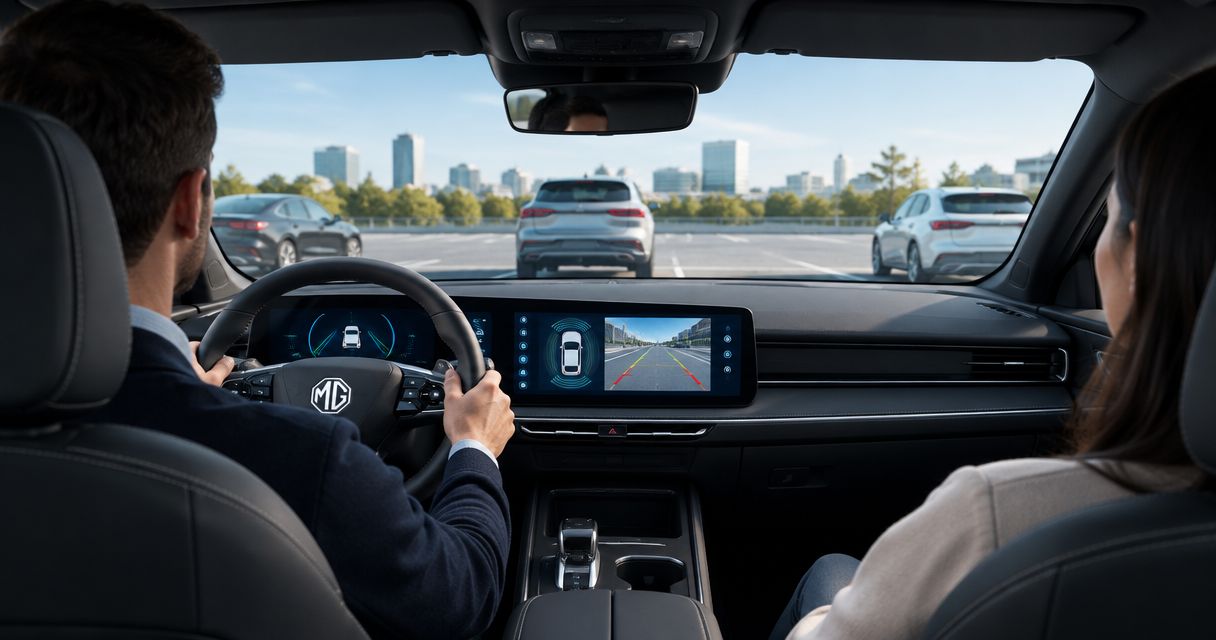
Ask the specialist to explain the parking equipment fitted to the exact MGS5 EV you are driving. Have the demonstration while stationary, including how to select the relevant display and what its warnings mean. Do not assume a feature shown elsewhere is fitted to this vehicle.
Choose a safe, permitted space with room to stop and reset. Start with a straightforward manoeuvre before attempting a space that resembles your usual parking situation.
Use 2 parking checks as a suggested minimum: one reverse-in exercise and one departure from the space, where conditions and permission allow. Parking is not finished when the car stops; you also need to judge the exit.
During the exercise, assess:
- Whether you can judge the vehicle's position using direct observation and mirrors.
- Whether any fitted display is easy to interpret from your driving position.
- Whether you understand any warning before acting on it.
- Whether you can position the vehicle without repeatedly changing your seating posture.
- Whether the door opens far enough for you to get out comfortably.
A successful dealership parking exercise does not prove the car fits your garage. Bring measurements of the opening, usable internal space and any fixed obstructions. Ask for the relevant official vehicle dimensions rather than estimating from appearance.
Why do comfort, visibility and parking impressions vary?
Different drivers can reach different conclusions in the same vehicle because their needs and test conditions differ. Record the circumstances alongside your verdict so you can make a useful comparison later.
- Driver position: seat height, backrest angle and steering adjustment change reach and sightlines.
- Passenger setup: people and child seats affect the space you need and the rearward view you assess.
- Road surface: a smooth road and an uneven road test different aspects of ride comfort.
- Lighting and weather: glare, rain and darkness require checks a clear daytime drive cannot settle.
- Parking layout: bay width, nearby walls, slopes and door-opening room change the task.
- Exact vehicle specification: confirm the model year, variant and fitted equipment rather than treating the model name as the complete specification.
For your 2026 comparison notes, separate observations from unanswered questions. Write that a warning was difficult to interpret, for example, rather than assuming it was absent or faulty. Ask for an explanation and repeat the check safely.
Can you check family comfort during the same appointment?
Yes. Bring the people and everyday items that determine whether the MGS5 EV works for your household, subject to the dealership's arrangements. Ask before bringing child restraints or bulky items so the appointment can accommodate the checks safely.
Set the driver's seat first, then assess the rear seat behind it. Check foot space, knee clearance, headroom and access without moving the front seat into a position you would not use.
For child restraints, follow the restraint instructions and the vehicle handbook, and seek qualified fitting advice where needed. A visual fit check does not establish correct installation.
Use the MGS5 EV family buying checklist to extend the appointment beyond the driver's seat. A family test drive should test the family setup, not an empty cabin.
What should you ask about ownership before leaving?
Keep the driving verdict separate from the ownership questions. A comfortable test drive does not answer how charging fits your home, which servicing requirements apply or what the vehicle's current Australian terms include.
Ask Melbourne City MG to explain the authorised servicing support relevant to the exact vehicle. Request confirmation of the applicable servicing schedule and vehicle-specific requirements without assuming another MG model follows the same arrangements.
For a clear record, organise your notes into 3 categories: passed, needs another check, and needs confirmation. Put physical observations in the first two categories and equipment or ownership questions in the third.
Melbourne City MG is best for metropolitan Melbourne buyers seeking an authorised MG dealership and servicing support in Clifton Hill. Use the appointment to connect your driving needs with the vehicle details you need confirmed before deciding.
Discuss your MGS5 EV test drive
Ask about the exact vehicle, practical fit checks and authorised servicing support in Clifton Hill.
FAQ
What should I check first on an MGS5 EV test drive?
Check your driving position first, while the vehicle is safely stationary. Set the seat and steering wheel, check pedal reach, then adjust the mirrors before driving.
How long should I spend setting up before driving?
Allow 5 minutes while parked as a planning suggestion, and take longer if you need help understanding the controls. Agree the overall test-drive appointment length with the dealership.
How do I know whether the MGS5 EV is comfortable for me?
Check that you can reach the pedals and steering wheel without stretching or crowding your legs, then reassess comfort after driving. A short appointment cannot establish how you will feel throughout a much longer journey.
Does every MGS5 EV have the same parking equipment?
Confirm parking equipment on the exact model year and variant you intend to buy. Ask for a demonstration of the fitted features rather than relying on a different vehicle's specification.
Can I bring my family to an MGS5 EV test drive?
Ask the dealership to arrange an appointment that accommodates your passengers and practical checks. Set your driving position before assessing rear-seat space, and discuss child-restraint checks in advance.
Can a test drive tell me whether the MGS5 EV fits my garage?
A test drive alone does not establish garage fit. Compare confirmed vehicle dimensions with your measured opening and usable space, including room for doors, access and fixed obstructions.
What should I record after an MGS5 EV test drive in 2026?
Record the exact vehicle's model year and variant, your comfort and visibility observations, and any parking concerns. Separate what you checked directly from equipment and ownership details still needing confirmation.
One last thing
Check how you get out, not just how you park. A car can sit neatly inside a marked bay while leaving you uncomfortable opening the door or reaching a child restraint. Repeat the exit check with your usual passenger where safe and permitted.
Before making your 2026 buying decision, resolve the concern that required the biggest compromise. Another seat adjustment or a clearer equipment explanation can settle a question; an unresolved everyday access problem deserves another practical check.